


Special report: affordable housing starts plummet
Social Housing’s analysis of official figures on affordable housing starts, completions and funding sources in the nine years between 2016 and 2024 has found that starts are plunging across England, with particularly sharp drops across all tenures in London. Keith Cooper reports


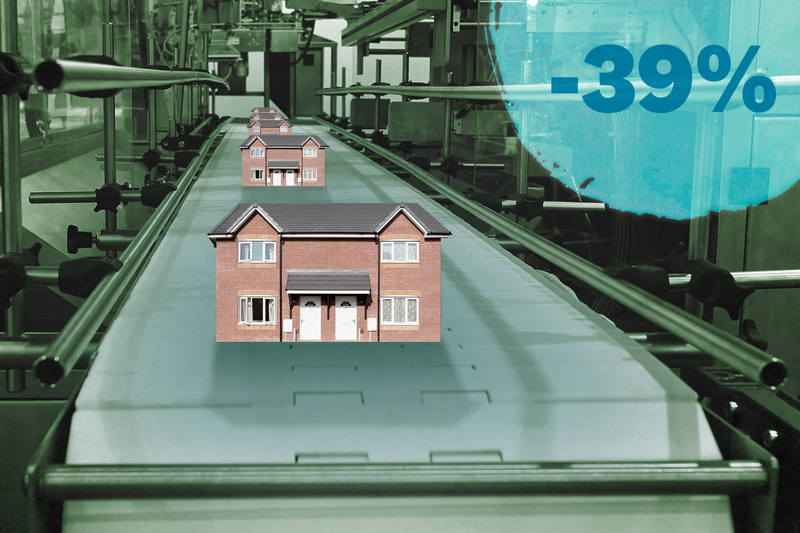
Housing starts in England fell 39% between 2023 and 2024 (picture: Alamy)
Sharelines
Special report: affordable housing starts plummet #UKhousing #SocialHousingFinanceAt a glance
- Starts rose 133 per cent from 28,902 in 2015-16 to a peak of 67,294 in 2019-20, but began falling the following year, before hitting 43,439 in 2023-24
- However, affordable housing completions almost doubled over the nine-year period – from 32,614 in 2015-16 to 62,289 in 2023-24
- Housing associations say that planning delays, including protracted wrangles over ‘nutrient neutrality’ solutions, led to a “massive drop-off” in starts and completions
Affordable housing starts are plunging across England, with particularly sharp drops across all tenures in London as development in the city becomes “difficult” and increasingly financially unviable.
These are just some of the findings of Social Housing’s analysis of official figures on affordable housing starts, completions and funding sources in the nine years between 2015-16 and 2023-24.
The analysis shows that affordable housing completions almost doubled over the nine-year period – from 32,614 in 2015-16 to 62,289 in 2023-24, the last year for which full-year figures are available. Affordable housing starts had the same upwards trajectory in the first half of the nine-year period, shooting up 133 per cent from 28,902 in 2015-16 to a peak of 67,294 in 2019-20. But starts began falling the following year, before hitting 43,439 in 2023-24.
Read more
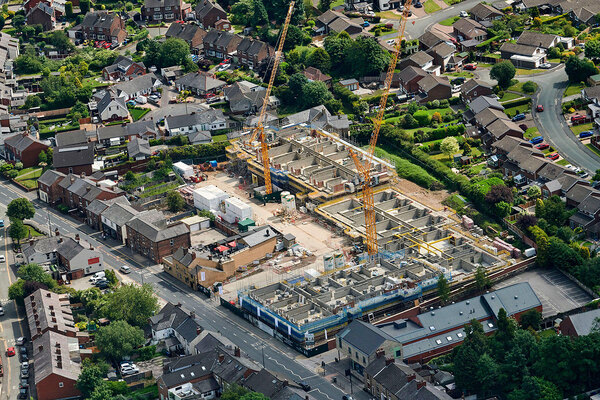


In London, the peak in affordable housing starts came later, at 26,386 in 2022-23. But then they fell to just 3,156 a year later in 2023-24. The latest quarterly figures from the Greater London Authority (GLA) suggest that this dramatic fall will continue, with only 1,560 starts reported between April and December 2024. For this analysis, housing association starts and completions include affordable homes funded by Homes England, the GLA and ‘other funding’ routes.
Housing associations say that planning delays, including protracted wrangles over ‘nutrient neutrality’ solutions, led to a “massive drop-off” in starts and completions. Registered providers are also continuing to turn down offers to acquire affordable homes built by developers under Section 106 deals, which are linked in this nine-year period to up to half of completed affordable homes in a year.
Affordable housing development has become particularly difficult in London amid rising construction costs and “complex regulatory requirements”, associations told Social Housing. This has made affordable housing development less attractive, sent housing starts tumbling, and pulled house builders outside the capital in search of more benign markets.
Meanwhile, worsening housing affordability in historically low-cost regions such as the North East, the North West, and Yorkshire and the Humber have seen completions for shared ownership and other homeownership products rocket up to 23-fold as demand for rental products climbs.
Joe Marshall, regional managing director for the South of England at Sovereign Network Group (SNG), tells Social Housing that a drop in starts would hit completions for the next five years. “Current market conditions – including sustained construction cost inflation, increased contractor insolvency risk, elevated interest rates, an ever-volatile political landscape and delays in the planning system – are significantly impacting housing delivery, regardless of the tenure,” he adds.
The analysis also points to significant changes in funding sources for affordable housing tenures in recent years and potentially into the future. It shows that in the seven years from 2017-18, most affordable housing completions were delivered through Section 106 planning deals. More than half of all affordable housing completions were delivered via this route in 2019-20, official data shows. This delivery route has, however, ailed since then. The number of starts linked to Section 106 planning deals has fallen year on year from a peak of 33,050 in 2018-19 to 12,822 in 2023-24.
This collapse in homes delivered through these planning deals has been well reported. A study by consultancy Savills last August said the drop in Section 106 homes was “primarily driven by severely constrained financial capacity among registered providers”.
“Not only does this impact affordable housing delivery, but also has the potential to significantly disrupt wider housing delivery.”
62,289
Affordable housing completions in England in 2024
8,506
Affordable rent starts in England in 2024
19%
Rise in social rent completions in the South East between 2023 and 2024
An overwhelming majority of Section 106 deals deliver affordable housing without social housing grant, our analysis shows.
Consultant Dick Mortimer, a former development director at Peabody, says that the challenges with Section 106 deals had made affordable housing development particularly difficult in London, and that few affordable housing developments now stack up financially without grant.
“Before Covid, most developers would be quite confident about getting a housing association on board before going on site, but that has now changed,” he tells Social Housing.
“Now most developers want to know that grant is there and to have a housing association on board before they commit to a long-term deal and way before they start digging,” he adds. “I know of very few schemes that don’t require grant from a viability point of view.”
With fewer affordable homes coming through Section 106 for ‘nil grant’, the demands on social housing grant in London will increase, Mr Mortimer says.
With Section 106 affordable housing starts collapsing, our analysis indicates that housing associations may soon return as the primary drivers of affordable housing. While Section 106 deals drove the lion’s share of completions in 2023-24, the number of starts funded by housing associations overtook Section 106 in 2019-20.
SNG’s Mr Marshall says that the association continues to acquire homes through Section 106, but is “shifting towards a more land-led programme”.
“It’s essential that these [Section 106] opportunities meet our Homes and Place criteria and are delivered by trusted partners who share our commitment to quality – and this leads us to saying ‘no’ to a lot of Section 106 opportunities which are offered to us.”
‘Homes and Place’ is a set of standards that “marks [the association’s] commitment to building and maintaining good-quality homes and better places to live,” SNG says.
Councils have remained the third direct driver of affordable housing throughout the nine years of our analysis. Council-led delivery has risen by 64 per cent from 4,835 in 2015-16 to 7,909 in 2023-24. Council-led completions include those funded by Homes England, the Greater London Authority, from Right to Buy receipts and through ‘other funding’ routes.
Steve Partridge, head of Savills’ Affordable Housing Consultancy, says council housebuilding programmes had been hampered by several funding pressures. While councils were given headroom in their Housing Revenue Account (HRA) budgets to borrow in 2012, this had been largely “stripped out” by government curbs on rent rises between 2016 and 2020.
“Having said that, I don’t know of an authority that doesn’t have some sort of build programme,” Mr Partridge adds. “In the run-up to Covid and through it, councils still maintained an ambition to build, but since then inflationary pressures, the increase in debt costs, the regulatory regime and the increase in demand for repairs have put more pressure on HRAs.”
Councils had responded to these pressures by either abandoning their housebuilding programmes, delaying them or switching to acquisitions from the open market or Section 106s, or by buying back former Right to Buy properties. Many had benefitted from the government’s Local Authority Housing Fund, which allows them to increase stock through acquisitions to reduce their temporary accommodation bills.
“There are not a lot of skills and capacity within local authorities to run big development programmes,” Mr Partridge adds. “The big benefit of acquisitions is that it takes the development risk away from the HRA.”
The analysis shows that completions have risen across England in all the three main tenure categories of shared ownership, affordable rent and social rent since 2015-16, but by different degrees. While the number of new social homes has increased by 45 per cent from 6,803 in 2015-16 to 9,866 in 2023-24, new shared ownership homes shot up almost fivefold over the same period from 4,084 to 20,364. Affordable rent completions rose 46 per cent from 16,544 to 24,155 over the same nine-year period.
Analysis of regional breakdowns reveals differing trends in starts and completions by tenure as worsening housing affordability has created exponential growth in shared ownership completions in areas where it was previously unpopular.
North West England
In the North West of England, shared ownership completions jumped more than sevenfold between 2015-16 and 2023-24, from a low base of 343 homes to 2,528. Social rent starts have risen tenfold from 109 in 2015-16 to 1,017 in 2023-24. Housing association Riverside said rising starts for social rent could also be due to most registered providers in the region having concluded their remediation works.
The end of Homes England’s Help to Buy equity loan scheme in 2023 and rising private rents drove an increase in demand for shared ownership and Rent to Buy models, a spokesperson for Riverside says. “We are seeing huge demand for Rent to Buy homes, with every development we bring to market oversubscribed. Rent to Buy is particularly beneficial for those who are unable to access social housing due to low priority on housing waiting lists.”
Major local authorities in the region also prefer rental products, the spokesperson adds. “Registered providers such as ourselves collaborate with local authorities… to guide our tenure decisions [and] Liverpool has traditionally preferred rental products,” the spokesperson said.
Yorkshire and the Humber
Yorkshire and the Humber has also seen rising demand for shared ownership, social rent and Rent to Buy homes as housing affordability across the region has worsened. Shared ownership completions across the region shot up more than 23-fold over the nine years from 74 in 2015-16 to 1,732 in 2022-23 as the number of social rented homes has followed an uneven trajectory, ending in an overall fall over the nine-year period.
Paul Fiddaman, chief executive of Karbon Homes, says years of constrained rents, inflation and grants that failed to keep pace with inflation meant the development of social or affordable rent housing in the region generally led to “losing money as an organisation”.
“If we are appraising a scheme in the North East for social or affordable rent, you end up with brackets around your net present value at the end of your scheme appraisal,” Mr Fiddaman says.
“Whereas it is possible in some areas of Yorkshire to get particularly affordable rents to stack up,” he adds. “There’s an attraction there from an economic point of view, there is massive unmet demand, and there aren’t that many housing associations active in that market.”
Shared ownership is “taking off” in the North East, Mr Fiddaman says.
“For the longest time it was a bit of a gamble. In the North East, you can still today buy a former council house for £60,000 to £70,000. The shared ownership alternative would be a half share in a new build, so shared ownership never really looked like good value. But that’s starting to change as house prices have gone up in the last three or four years by more than the rate of increase in people’s salaries. Access to housing is getting a little bit harder for people.”
South West England
Housing association Abri says there is a “massive need” for shared ownership in the South West and it is selling “really well”. Sam Stone, its director of land and planning, says shared ownership “hits that part of the market where people haven’t got the deposit to buy on the open market but have got too much money to be able to qualify to get on the extensive housing list to get affordable accommodation”.
Shared ownership completions in the South West peaked at 2,165 in 2022-23, a sixfold increase on the 368 in 2015-16. Affordable housing starts across the region have, however, fallen year on year from their 2017-18 peak of 6,487 to 4,789 in 2023-24 despite rising demand and the boom in the homeownership market.
Mr Stone says that development in the region has been hit by ‘nutrient neutrality’ planning rules, which aim to minimise pollution from new developments. “While there is light at the end of the tunnel, we’ve had a massive drop-off in numbers. It is affecting starts and completions and will do so for a number of years,” he says.
Mr Stone says that it has taken up to two years to agree ways of meeting nutrient neutrality requirements. Some councils in the South West are close to agreeing “strategic solutions” that should free up “lots of planning applications”, he adds. “It should pick up soon.”
London and the South East
The South East region has seen rises in affordable housing completions for social rent, shared ownership and affordable rent, although the latter two have started to dip. Shared ownership completions shot up from 975 in 2015-16 to hit a peak of 4,243 in 2022-23, before a slight drop to 3,973 the following year. Social rent completions have, however, continued to rise – by 19 per cent between 2022-23 and 2023-24.
Affordable housing completions across most tenures also rose in London between 2015-16 and 2022-23. But in contrast to the South East, completions for most of the main tenures in London began falling in 2023-24. As mentioned, starts in the capital had fallen off a cliff the previous year and have continued to decline in the first two quarters for 2024-25.
SNG, which operates across both regions, says that demand for shared ownership remains high in accessible locations with strong employment markets and limited housing supply, but that the London market presents “unique challenges”.
“Supply has declined – most notably in London – driven by rising construction costs, funding constraints, and complex regulatory requirements, particularly affecting high-density, flatted developments,” SNG’s Mr Marshall says. “As the graphs show, there is generally a decline in housing starts across the country, and particularly in London, which will have a direct impact on the number of new affordable tenures being delivered over the next five years.”
SNG has a “sizeable pipeline” of new affordable homes, Mr Marshall says.
“But the speed at which we can bring these to delivery is hampered by continued slow planning processes and regulatory complexity such as nutrient neutrality and biodiversity net gain [whereby new developments must increase biodiversity by at least 10 per cent to get planning permission],” he adds. “Current market conditions – including sustained construction cost inflation, increased contractor insolvency risk, elevated interest rates, an ever-volatile political landscape and delays in the planning system – are significantly impacting housing delivery, regardless of the tenure.”
Mr Mortimer says there is now a “pull for developers to go outside of London”. He says developers will be drawn out of London by the prospect of working on new towns. “Most schemes in the capital are high density. There are lower risks and less capital lock-up to build 1,000 units in two-storey blocks outside of London than 1,000 units in 20-storey blocks inside London.”
Despite the clear downward trajectory of affordable housing completions and stark drops in starts across most tenures shown by this analysis, there seems some room for optimism for the future. Projections by the Office for Budget Responsibility claim that housebuilding numbers for the UK as a whole will hit their highest level for more than 40 years and deliver 1.3 million homes by the end of this parliament.
But the sector will have to wait until the Spending Review in June for an indication of how many of these will be affordable, of what tenure, and how much of a strain their delivery will put on their balance sheets.
Other recent special reports from Social Housing

Picture: Alamy
Special report: total development income hits £3.8bn
Total development income hit £3.8bn for the year to 31 March 2023, a rise of 3.2 per cent, Social Housing’s analysis of the accounts of 124 UK housing associations has found. Chloe Stothart and Robyn Wilson report
Special report: capital commitments hit £42bn
Planned capital spend among housing associations rose four per cent in the latest full year – a smaller rise than in the previous year. Chloe Stothart and Robyn Wilson report
Special report: net impairments hit record high
Net impairments at UK housing associations rose to a record high of £287.5m in 2023. Chloe Stothart and Robyn Wilson look at individual housing associations’ data and find out what drove the rise in write-offs
Special report: UK staff pay climbs nearly 7% amid rising costs and recruitment challenges
Average staff pay for the largest housing associations in the UK increased by nearly seven per cent in 2023, driven by the cost of living and a shortage of staff
Accounts digest 2023: operating surplus falls 14%
Social Housing’s analysis of registered providers’ 2023 audited accounts finds a continuation of some of the trends of the previous year, with operating margins falling for most organisations
Special report: data shows major four-year rise in temporary accommodation levels
Exclusive analysis by Social Housing has found that the number of households in temporary accommodation in England has risen by nearly a third over the past four years
Sign up for Social Housing’s data analysis newsletter

Picture: Alamy
New to Social Housing? Click here to register and sign up for our data analysis newsletter
The data analysis newsletter is a twice-monthly round-up of Social Housing’s leading data analysis, keeping you up to speed on key trends and pointing you to all the data you need on financial and operating performance in the sector and beyond.
Already have an account? Click here to manage your newsletters.
RELATED


- © Social Housing
- All rights reserved