


Balancing investment and impact: how to navigate financial pressure in social housing
When making decisions on trade-offs, housing providers must maintain a clear line of sight between financial decisions and customer outcomes, writes Rosemary Farrar of Platform Housing Group



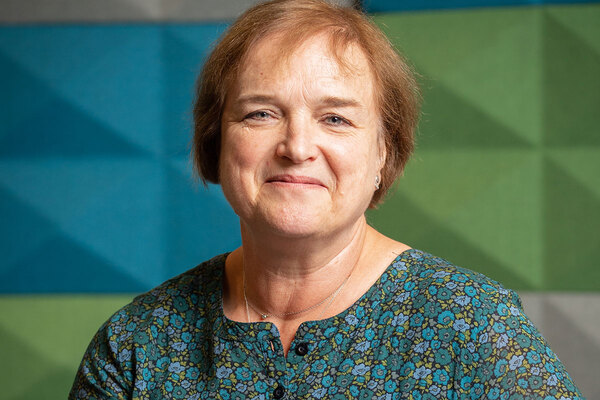
Rosemary Farrar
Rosemary Farrar is chief financial officer at Platform Housing Group

Across the country, housing providers are balancing rising costs with their core purpose (picture: Alamy)
Sharelines
When making decisions on trade-offs, we must maintain a clear line of sight between financial decisions and customer outcomes, writes Rosemary Farrar, chief financial officer at Platform Housing Group #UKhousing #HousingFinanceThe social housing sector is being asked to deliver more than ever before – more homes, higher standards and improved services – at a time of sustained financial pressure.
Across the country, providers are balancing rising costs with their core purpose: delivering safe, affordable homes and supporting communities. For many, including Platform Housing Group, this is becoming an increasingly complex challenge.
Platform manages around 50,000 homes across the Midlands and supports more than 120,000 customers. We have a strong balance sheet but, like others in the sector, we are operating in an environment where the cost of delivering housing has risen significantly.
Read more


Investment requirements in existing homes have increased as expectations around safety, quality and energy efficiency have rightly sharpened. Building safety, damp and mould remediation, and decarbonisation programmes are no longer optional, they are essential – and, in many cases, urgent.
At the same time, the cost of building new homes has escalated. Inflation in materials and labour, coupled with ongoing supply chain pressures, has made development more expensive and, in some cases, less viable.
This is compounded by the cost of borrowing, which has increased significantly in recent years, placing further pressure on business plans and long-term investment strategies.
While the introduction of a long-term rent settlement has brought a degree of stability, it does not fully offset these pressures. As a result, providers are having to make increasingly careful decisions about how they prioritise investment – balancing the need to maintain and improve existing homes with the imperative to build new ones.
At Platform, this balance is reflected in a continued commitment to both. The organisation delivers around 1,100 new homes each year while also investing heavily in the safety, quality and sustainability of its existing stock.
For customers, however, these pressures are often felt more directly, through rent levels, service charges and the pace of service delivery. This makes transparency and communication critical.
There is a growing expectation – from customers, regulators and government – that providers clearly demonstrate how income is being used and how investment decisions translate into improved outcomes.
The sector is also becoming more open about the trade-offs it faces. Delivering against all priorities simultaneously is increasingly difficult, and there is a growing recognition that choices must be made about where investment will have the greatest impact.
At the same time, providers continue to support customers through wider economic pressures, recognising that housing plays a central role in stability, well-being and opportunity.
“There is a growing expectation – from customers, regulators and government – that providers clearly demonstrate how income is being used”
Ultimately, housing associations remain long-term custodians of homes and communities. Their focus is not just on meeting today’s challenges, but on ensuring homes are safe, affordable and fit for the future.
For organisations like Platform, that means maintaining a clear line of sight between financial decisions and customer outcomes, ensuring that investment leads to safer homes, improved services and stronger communities.
In a challenging and evolving landscape, the sector’s ability to balance long-term financial investment and resilience with short-term objectives will be critical, and so too will its ability to communicate those decisions clearly and credibly.
Rosemary Farrar, chief financial officer, Platform Housing Group
Sign up for Social Housing’s comment newsletter
The comment newsletter brings you a fortnightly selection of specialist opinion, guidance, and political and economic commentary, from a unique range of leading experts.
Already have an account? Click here to manage your newsletters.
RELATED






- © Social Housing
- All rights reserved