


Regulator of Social Housing and National Housing Bank to support new investment models
The Regulator of Social Housing (RSH) and the National Housing Bank (NHB) will both support new investment and partnership models to deliver new homes, their respective chief executives have said.


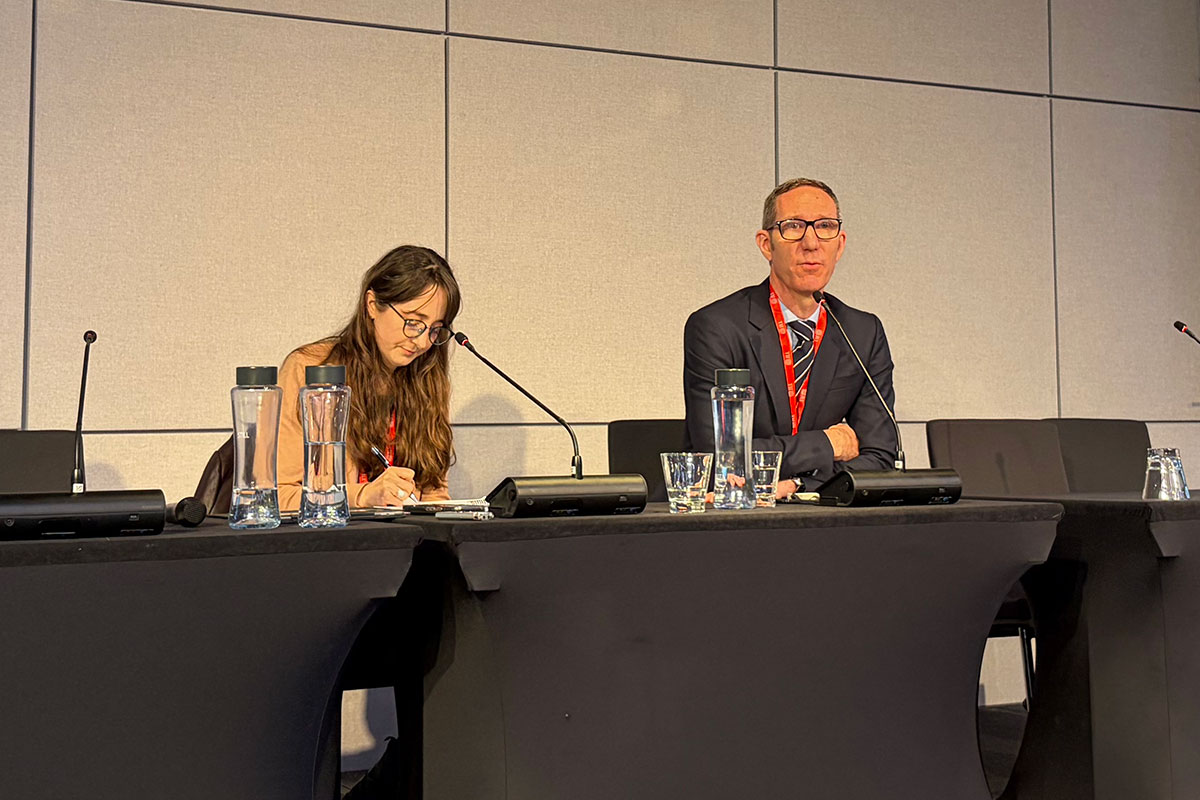
Sarah Williams, editor of Social Housing, and Jonathan Walters, chief executive of the Regulator of Social Housing, at the Social Housing Finance Conference in May 2026
Sharelines
The RSH and the NHB will both support new investment and partnership models to deliver new homes, their respective chief executives have said #UKhousing #HousingFinanceJonathan Walters, who took up the role of chief executive of the RSH at the start of May, said that the regulator wants to support innovation – as long as tenants are protected.
Speaking at the Social Housing Finance Conference on Thursday (14 May), Mr Walters said: “We want to make sure we’re creating the environment where new capital, new models, new innovation can come in and can help with that supply of new affordable homes.”
It comes after Mr Walters used his appointment last month to say he wanted to see “new models and new ideas” coming forward.
A number of housing associations (HAs) have said recently that they are exploring models to release capital.
Meanwhile, high-profile proposals for interventions at a sector level have included research from Legal & General modelling what it believes would be a “scalable” approach for partnership between investors and HAs. This is based on some of the principles applied in the insurance giant’s recent deal with Hyde.
Read more
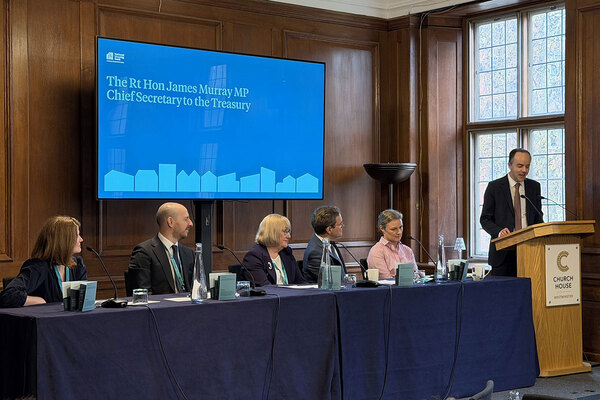


Mr Walters told conference delegates that it would be important that anyone coming into the sector remembers that this is “not an ‘asset class’ like any other”.
“This is not offices, it’s not warehouses, it’s not infrastructure. These are people’s homes. People who are going to want to raise their families in those homes. There’s a reason these homes are traditionally delivered by the state and charitable sector, because this is an activity that’s really touching on people’s lives.”
The regulator therefore wants to see new entrants that are committed to delivering homes that will remain in the sector for the long term.
“We’re really interested in anyone who wants to come into this sector that’s got a real commitment to the long-term provision of those assets,” he said.
“You may only be funding them to begin with, and then you may have exit strategies to go out. All of that is fine, but you’ve got to ensure that those homes are being built and being delivered, people can live in them and raise their families.”
Mr Walters said the RSH now needs to prepare itself to “help deliver that agenda”. The discussion document it will publish in the summer will addresses this, and Mr Walters urged the sector to take part in this upcoming consultation.
When asked about how the RSH will work with the NHB, he said that the regulator is used to working with other investors, and that both institutions wanted to see the “crowding in” of investment.
“I think it’s important as a regulator we have an ecosystem where there is that demand that capital wants to come into the sector,” Mr Walters said.
He focused on the importance of delivering new homes, saying this is in the sector’s “DNA” and providers are looking to “drive that forward”.
Financial health
Referring to housing providers’ financial health, Mr Walters said that while margins have dropped “significantly”, it is “important” to remember it is still an investment-grade sector.
He said: “The sector is still generating sufficient resources to build homes, and there’s a real diversity right across the sector. So, we publish at an aggregate level, and when you look at some of the figures on an aggregate level, they are quite worrying.
“But when you break that down into individual organisations, there are many organisations with significant financial strength, and we want to see everyone coming to the table to look to build new homes.”
National Housing Bank is ‘there to support’
Speaking earlier on a separate panel session, Simon Century, chief executive of the NHB, said the bank will support new partnership models and new entrants to social housing.
He said that for housing associations that want to explore how to partner with others in the “right kind of way”, the bank is “absolutely there to go and make that happen”.
Mr Century said there is a need for new entrants coming into social housing who understand what it means to be operating in the sector and how the rules and investment works, and do so with “the right regulation around it”.
“We will support new entrants,” he said.
Mr Century said that in a difficult market, the NHB is there to support the sector with “quite a lot of toolkit”.
This includes £16bn in loans, equity and guarantees to crowd in £53bn of private investment. Within the £16bn, the bank has £1bn of low-cost loans to deploy, which Social Housing revealed last month will launch in the autumn.
The NHB is owned by Homes England, which also has a £27.2bn share of the £39bn Social and Affordable Homes Programme.
Amy Rees, chief executive of Homes England, told Social Housing at the time of the bank’s launch in April that there would be “no wrong front door” at the agency or the NHB, meaning that the two organisations will refer business to each other.
Mr Century told the conference: “We are there to listen… we’re there to support.”
Sign up for Social Housing’s weekly news bulletin
Social Housing’s weekly news bulletin delivers the latest news and insight across finance and funding, regulation and governance, policy, and strategy, straight to your inbox. Meanwhile, news alerts bring you the biggest stories as they land.
Already have an account? Click here to manage your newsletters.





- © Social Housing
- All rights reserved