


Trend report: how many homes are failing the Decent Homes Standard?
Chloe Stothart analyses data from the English regulator on stock condition surveys and the Decent Homes Standard, where a rise in surveying has uncovered more homes that fail to meet the standard


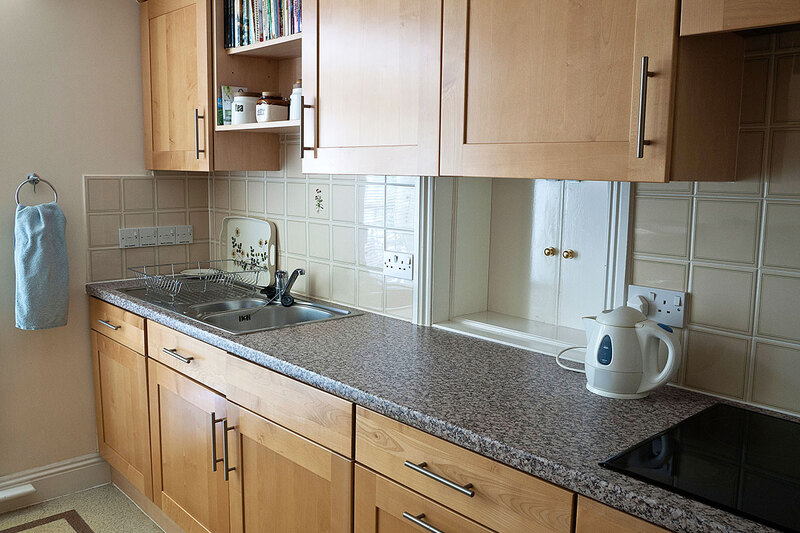
Under the current Decent Homes Standard, a kitchen is classed as ‘modern’ if it is 20 years old or newer (picture: Alamy)
Sharelines
Trend report: how many homes are failing the Decent Homes Standard? #UKhousing #HousingFinanceAn increase in stock condition surveying has led to slightly more organisations uncovering homes that fail to meet the Decent Homes Standard (DHS), according to statistics from the Regulator of Social Housing (RSH).
The RSH’s Statistical Data Return (SDR) for 2025 found that large landlords surveyed five per cent more homes in 2024-25 than a year earlier. There was a small fall in the number of organisations that found no non-decent stock in their stock condition survey, and a rise in the group that found between one per cent and five per cent of their stock that did not meet the standard.
Read more
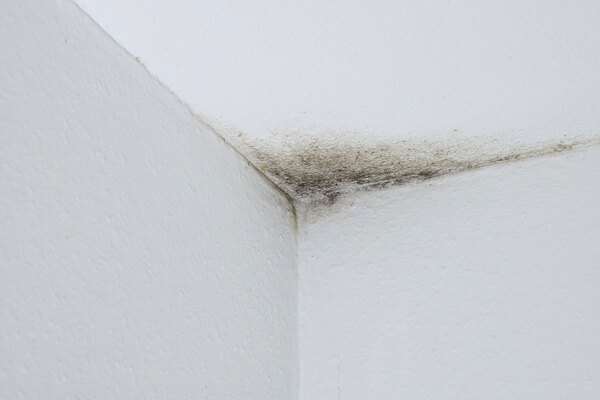

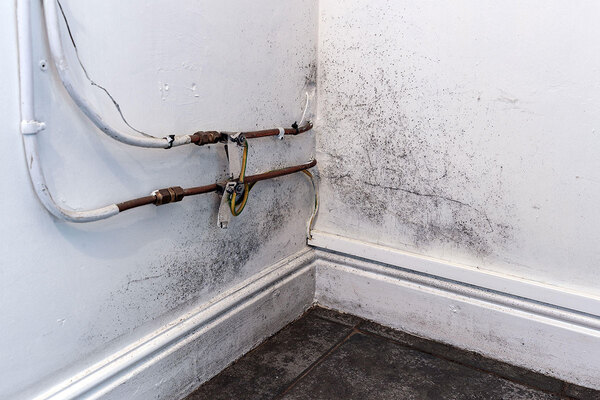
However, the total number of non-decent homes found in the 2025 surveys fell from 4.2 per cent the previous year to 2.9 per cent of the stock, with the proportions of failing stock varying significantly between organisations.
Two organisations said more than a fifth of their stock was non-decent.
The regulator said the increase in stock condition inspection levels could be due to the introduction of consumer standards, increased scrutiny of stock conditions and landlords returning to their inspection schedule after a drop during the pandemic.
There are differences between the results of the stock condition surveys, which cover the portion of the homes surveyed during the year, and the number of non-decent units reported to the regulator at year-end, which are used for the SDR.
The RSH said the accuracy of the data reported to it will be heavily influenced by the scope and frequency of stock condition surveys carried out by private registered providers and may contain some extrapolation to fill data gaps.
The RSH said the figures for the majority of private registered providers were likely to cover only figures that had been confirmed to fail the DHS and so might be an underestimate.
The regulator said that some of the organisations reporting the highest levels of non-decency were counting any units that had not been confirmed as compliant as being non-decent, so they expect to see a reduction in the number of non-decent units as they conduct more physical inspections.
The proportion of non-decent homes reported to the RSH at the end of 2025 and 2024 stayed fairly steady at around 0.4 per cent. However, the number of homes identified and the number of homes remediated in-year were much higher (1.6 per cent and 1.4 per cent respectively). The RSH said this suggested that the year-end figures reported to it underestimated non-decency.
Failures on ‘Criterion A’ – homes with one or more serious hazards under the Housing Health and Safety Rating System – were the most common ones found in the stock condition surveys (11,711 properties), but the numbers reported at year-end were far lower (3,892). This suggests providers are taking rapid action to fix these failings, the RSH said.
The most common criterion to fail in year-end reports to the regulator (rather than in the stock condition survey) was not being in a reasonable state of repair (Criterion B), which 47.7 per cent of stock failed.
Criterion C – having reasonably modern facilities and services – was failed by the smallest proportion of units (4.4 per cent). Under the current standard, ‘modern’ means 20 years old or less for kitchens and 30 years old or less for bathrooms, meaning kitchens and bathrooms might pass if they were replaced during the peak of the stock transfer programmes, or in subsequent years when the sector’s finances were healthier than today.
Similarly, only 15.7 per cent of homes failed on reasonable degree of thermal comfort (Criterion D) – a big drop from the 47 per cent that failed in 2023.
Housing associations are weighing up what the new standards will mean for them.
Louise Beard, deputy chief executive at Coastline Housing, says: “In terms of thermal comfort, a lot of organisations are working to improve the energy efficiency of homes and there’s been a lot of funding available for additional top-up insulation, external wall insulation, solar panels, all sorts of elements to improve the heating systems within homes. I think the drive towards EPC [Energy Performance Certificate] C as a minimum is having a positive impact on the thermal comfort.”
The RSH’s statistics also showed a big gap in decency levels between councils and housing associations. Levels of non-decency ranged from 7.2 to 9.5 per cent among stock-holding local authorities, compared with 0.3 to 0.7 per cent across housing associations over the past decade. This is unsurprising given that the local authorities will not have benefitted from the extra investment available through stock transfer.
Additionally, though, levels of non-decency among councils have been rising since 2021 (from 7.3 per cent in 2021 to 9.1 per cent in 2024 – the most recent year for which there is data), while housing associations have seen much smaller percentage changes (0.4 per cent in 2021, 0.5 per cent in 2025 and 0.6 per cent in 2023).
Ms Beard adds that councils have only come under the RSH’s regulatory regime recently.
“Now that they’re putting things in place to understand their stock and get the data, they’re probably finding that they’ve got way more investment needs than they were aware of initially,” she says.
New Decent Homes Standard
The new DHS – which introduces several extra requirements – was published in January.
The new standard, which providers will have to meet from 2035, introduced additional requirements such as that homes must be free of damp and mould and meet minimum energy efficiency standards (MEES). It also amended some of the existing criteria.
Under the MEES, providers must comply with any one of the metrics under the reformed EPC Band C by 2030, and then meet EPC Band C against a second metric by 1 April 2039.
The new DHS also emphasises the condition of components rather than their age.
Ms Beard says key changes include the move to EPC Band C and failing properties if a single key component becomes non-decent, rather than if two of the major ones fail.
On the latter point, she says: “It doesn’t affect the way that we work at Coastline, but I would imagine it will affect some organisations who are leaving components to replace them at the same time.”
The shift to assessing the condition rather than the age of components is positive. Ms Beard says she thinks time to replace components might balance out as some households take better care of their properties than others, so some will be replaced sooner than under the current age-based system, and some later.
“We thought that, overall, it would be positive for management of our stock and for our customers.”
Sign up for Social Housing’s data analysis newsletter

Picture: Alamy
New to Social Housing? Click here to register and sign up for our data analysis newsletter
The data analysis newsletter is a twice-monthly round-up of Social Housing’s leading data analysis, keeping you up to speed on key trends and pointing you to all the data you need on financial and operating performance in the sector and beyond.
Already have an account? Click here to manage your newsletters.
RELATED

News13 Feb 2026
Rent increases expected to ‘outpace’ inflation, says S&P

News11 Feb 2026
Major London provider sees technology chief exit


- © Social Housing
- All rights reserved