


Trend report: stock, rents and regulation in supported housing
Chloe Stothart analyses data from the English regulator on the decline in the number of supported housing units owned by registered providers



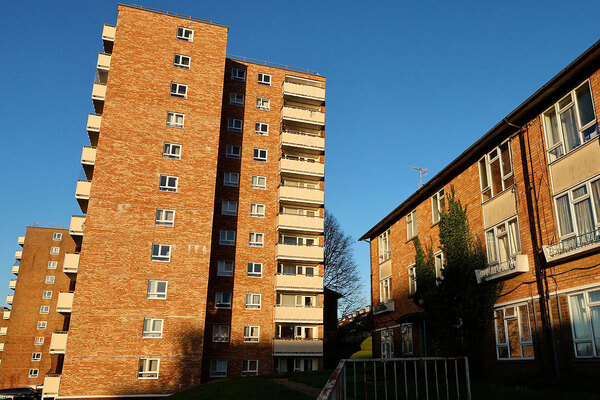
Supported housing’s vulnerability is largely a result of precarious funding and a shortage of provision compared to demand (picture: Alamy)
Sharelines
Chloe Stothart analyses data from the English regulator on the decline in the number of supported housing units owned by registered providers #UKhousing #HousingFinanceStock numbers in supported housing and housing for older people fell sharply in 2017 after a change of definition, and have hardly changed since.
The number of these homes owned by registered providers fell from almost 425,500 to just under 400,000 between 2016 and 2017, the Regulator of Social Housing’s (RSH) Statistical Data Return shows.
However, a big part of the change was due to reclassification of some housing for older people as general needs housing under the Welfare Reform and Work Act 2016 because it did not meet the definition of support in the act, which differed from the classification used by the RSH. This was a statistical change, and these homes would have continued to house their existing tenants.
Sue Ramsden, policy leader at the National Housing Federation (NHF), says it is difficult to tell how much of the change in numbers is down to the change in definition. “There were lots of other things happening in changes to stock and supported housing policy,” she says.
Read more



Funding vulnerability
Supported housing’s vulnerability is largely a result of precarious funding and a shortage of provision compared to demand. Ms Ramsden talks of the “financial fragility of a model that depends on a combination of revenue funding for support and residents claiming benefits to cover higher rents and service charges”.
If a cash-strapped local authority cuts the funding or the service charge is deemed ineligible for benefits, then the scheme becomes unviable, she points out.
The current funding situation follows many years of reduction in the Supporting People programme, which funded supported housing services. The removal of its ringfence in 2009 meant some councils spent the money on other services.
As the funding reduced, so some providers attempted to fill the loss by claiming enhanced levels of housing benefit through the exempt accommodation rules. The sector attracted some rogue providers that provided poor-quality accommodation and support while claiming additional benefit.
The Supported Housing (Regulatory Oversight) Act, which became law in 2023, was aimed at tackling these concerns. The government is analysing feedback from a consultation on measures to implement the act, and while providers welcome the intention to drive out rogue landlords, there are concerns that the act will place burdens on an already stretched sector unless it is amended.
Over the years, funding cuts have led some providers that also run general needs homes to withdraw from supported housing. Andrew van Doorn, chief executive of HACT, says: “They started to either transfer to other landlords, or they handed back contracts to local authorities.”
He says some properties that had been supported housing were converted into general needs provision, such as temporary accommodation for homeless people.
Funding for supported housing services remains a serious problem. A survey of members by the NHF last year revealed that more than half of the 126 respondents said some schemes were likely to close without long-term funding, putting more than 50,000 homes at risk, and over a fifth said they would have to consider withdrawing from supported housing altogether.
Challenges vary in different parts of supported housing, with some non-statutory services in particular facing reductions. Ms Ramsden gives the example of older people’s housing schemes where funding has been withdrawn for the extra-care component but remains for the statutory care component, which “hollows out the service” and means it can no longer meet some levels of need.
Rents
Rents in supported housing over the past 10 years have fluctuated, the Statistical Data Return shows.
The Welfare Reform and Work Act’s rent cut in supported housing lasted from 2017 to 2020, after a year’s delay in implementation. It did not apply to some provision, such as specialised supported housing. The figures used here, which cover net rents excluding service charges, are affected by both the cuts and the exemptions as well as local factors.
The rent rises in some regions during the rent cut period may be partly down to stock that was exempted from the cuts.
In particular, the RSH’s report flagged the eight per cent spike in rents in the West Midlands in 2018 as being due to the expansion of providers that had previously had less than the 1,000 units required for inclusion in the Statistical Data Return. Half the stock of these seven lease-based providers was exempted from the rent cap, and more than half of the units were in the West Midlands.
If these seven providers were removed from the figures, the year-on-year rent rise nationally decreases from two per cent to 0.2 per cent and in the West Midlands from eight per cent to 0.1 per cent.
The six per cent fall in rents in the region in 2020 was driven by providers that had changed the classification and rents of their stock following intervention by the regulator, the RSH’s report on the year’s Statistical Data Return said.
Rents rose after the cap was lifted with a particularly steep rise in 2024 because inflation reached 11.4 per cent. Providers were permitted to increase rents by 12.1 per cent, but many chose to make a smaller uplift.
There are several caveats to be made about the rent figures, including that they cover a particularly wide variety of properties in supported and older people’s housing. For example, in sheltered housing, rents are often close to general needs levels, whereas specialised services can be very expensive.
Future issues
A future issue is the Mental Health Act 2025, which could result in even more increased demand for supported housing for several reasons, including limits on the use of detention, particularly for people with autism or learning disabilities but no mental illness. Shortage of supported housing is already the biggest reason for delayed discharge from psychiatric hospitals, accounting for 19 per cent of cases in May 2024, according to the NHF’s research.
There is also the question of where increased demand for supported housing and housing for older people fits into the government’s push for more homes.
“We can’t just build lots of new homes for working-age families because there’s a whole group of people who will otherwise miss out,” Mr van Doorn says. “If government is going to build significantly more homes, how do we make sure that all parts of our community who need access to good-quality homes actually get that access?”
Sign up for Social Housing’s data analysis newsletter

Picture: Alamy
New to Social Housing? Click here to register and sign up for our data analysis newsletter
The data analysis newsletter is a twice-monthly round-up of Social Housing’s leading data analysis, keeping you up to speed on key trends and pointing you to all the data you need on financial and operating performance in the sector and beyond.
Already have an account? Click here to manage your newsletters.
RELATED





- © Social Housing
- All rights reserved