


NHF says new planning act will enable housing associations to ‘deliver at scale and pace’
The National Housing Federation (NHF) has said it is “confident” the new Planning and Infrastructure Act will enable housing associations to “deliver at scale and pace”.


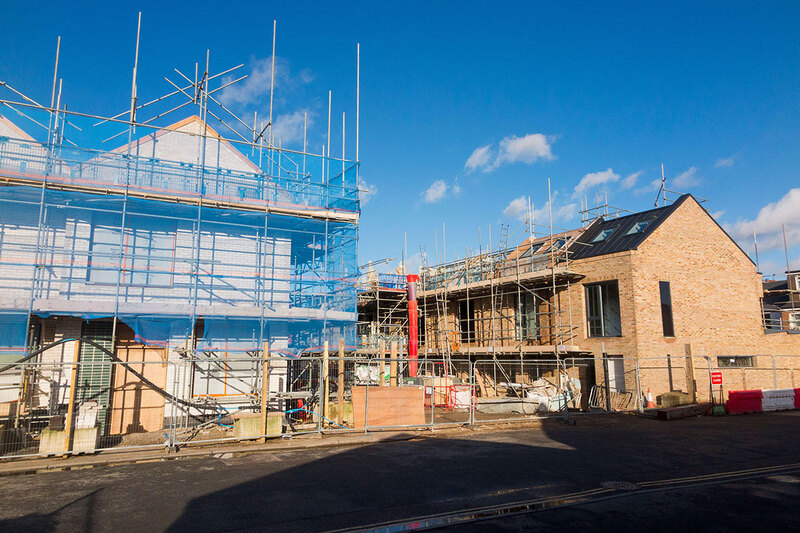
MHCLG said the new act will also modernise planning committees to focus on the most “significant developments” rather than smaller projects (picture: Alamy)
Sharelines
The National Housing Federation has said it is “confident” the new Planning and Infrastructure Act will enable housing associations to “deliver at scale and pace” #UKhousing #SocialHousingFinanceThe government said that the new act, which received royal assent on Thursday (18 December), introduces a wide range of measures to “speed up housebuilding and deliver critical infrastructure”.
The Ministry of Housing, Communities and Local Government (MHCLG) added that the act will remove blockages and delays in the planning system, accelerating the construction of tens of thousands of new homes across every region.
Kate Henderson, chief executive of the NHF, welcomed the enactment of the bill: “At a time when the housing crisis continues to impact families up and down the country, it’s welcome to see the government push forward with its ambitious housebuilding agenda and to see the Planning and Infrastructure Act receive royal assent.
“With more than 170,000 children in temporary accommodation, it’s essential that we pull every lever to ramp up the delivery of truly affordable homes.
“Planning reform is an essential part of solving the housing crisis, and we’re confident that the measures within this act will unblock delays in the system and enable housing associations to deliver at scale and pace. We look forward to continuing to work in partnership with the government to deliver on a decade of renewal for social housing.”
Read more



The government said the act will limit the number of attempts at legal challenge against government decisions on major infrastructure projects, with only one attempt rather than three for cases deemed by the court as “totally without merit”.
The act also introduces a new Nature Restoration Fund, which will allow developers to start the construction of multiple housing and infrastructure projects faster.
Regarding development corporations, the act will bring in extra powers for them to speed up the delivery of large-scale projects, including the next generation of new towns, with more affordable homes and public transport.
MHCLG said it will also modernise planning committees to focus on the most “significant developments” rather than smaller projects, speeding up local decisions on new homes.
Megan Hinch, policy manager and policy lead for supply and planning at the Chartered Institute of Housing (CIH), welcomed the government’s “commitment to reforming the planning system to ensure it can effectively support the development of much-needed homes”.
“We need to build healthy communities that are sustainable, fit for the future and accessible for all. It is crucial that housing is planned strategically and holistically to ensure that all new homes have access to necessary infrastructure and nature,” she said.
Ms Hinch added: “We must also ensure that local planning teams have the capacity and resources to implement these changes and [we] were pleased to see this included in the Autumn Budget.
“CIH will support our members as these significant reforms are brought into practice, alongside a range of other planning changes with the National Planning Policy Framework.”
Earlier in December, MHCLG launched another consultation on the National Planning Policy Framework (NPPF) after an initial consultation on this in December last year.
The government said it is “now proposing a fuller and more definitive update” of national planning policy to build on this initial consultation and draw on the engagement via subsequent working papers.
“The new NPPF... marks the culmination of a sustained push over the first period of this parliament to overhaul the planning system – a journey that began with those urgent initial changes and continued with the [Planning and Infrastructure] Bill, and which will be brought to a conclusion by the outcomes of this consultation,” MHCLG said in its report.
“Taken together, these reforms represent a truly seismic re-gearing of the system – in support of growth, and through growth of hope and opportunity.”
The government said there are proposals designed to make planning policy easier to use, underpin the development of “faster and simpler local plans”, and be more directive of decision-making in support of both appropriate housing and commercial development.
Ms Henderson said that the NHF was pleased to see the government continuing to bring forward “necessary planning reforms to get much-needed new housing and community infrastructure built”.
She added: “Addressing delays in the planning system will better enable housing associations to build homes at scale and pace. It is particularly welcome to see a focus on delivering rural affordable housing and accessible housing, both of which are in desperately short supply.”
However, Ms Henderson also expressed the NHF’s concerns about the proposal to water down the requirements for on-site provision of affordable housing on medium-sized sites.
“Section 106 planning contributions remain a vital tool for delivering affordable housing, accounting for nearly 50 per cent of new affordable housing development for nearly a decade, and we urge the government to stand by its manifesto commitments to strengthen the existing developer contributions system,” she said.
Ms Hinch said that the CIH welcomed the planning reforms.
She said the new national mandatory minimum target of at least 40 per cent accessible homes is a “great improvement” on existing requirements and will help meet “significant need both now and in the future”.
“We are also pleased to see the continued measures to boost planning capacity through support for [small and mediu-sized] builders and the emphasis on strong infrastructure links for new developments,” Ms Hinch said.
“We particularly support the commitments to increase social and affordable housing in rural communities and are encouraged that the government is committed to working to improve the Section 106 process to boost the number of social and affordable homes.
“We look forward to working with government to keep going further to support building homes that are affordable, well-designed, sustainable and accessible for all – for example, by mandating M(4)2 accessibility standards for all new homes.”
Sign up for Social Housing’s weekly news bulletin
Social Housing’s weekly news bulletin delivers the latest news and insight across finance and funding, regulation and governance, policy, and strategy, straight to your inbox. Meanwhile, news alerts bring you the biggest stories as they land.
Already have an account? Click here to manage your newsletters.





- © Social Housing
- All rights reserved