


Lease-based supported housing provider achieves compliant grades, six years after High Court legal challenge
A lease-based specialised supported housing provider that took the regulator to the High Court in dispute of non-compliant grades six years ago has now achieved regulatory compliance, with G2/V2 grades.



Inclusion Housing is based in York (picture: Alamy)
Sharelines
Lease-based supported housing provider achieves compliant grades, six years after High Court legal challenge #UKhousing #HousingFinanceThe Regulator of Social Housing (RSH) upgraded Inclusion Housing Community Interest Company from G3/V3 to G2/V2, in a regulatory judgement on Wednesday (10 June).
Inclusion manages around 5,000 homes and predominantly provides specialised supported housing and works with care providers to provide accommodation and support for vulnerable adults with complex learning and physical disabilities.
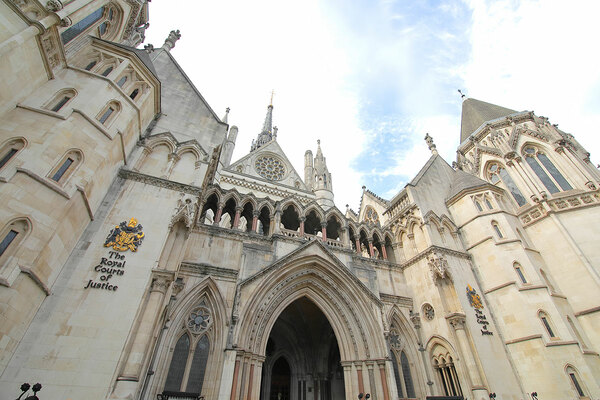
The regulator gave Inclusion G3/V3 grades in February 2019. Inclusion then challenged the ruling in the High Court the following year, in what was understood to be the first case of its kind, claiming that the regulatory judgement was “unlawful” on a number of grounds.
However, in February 2020, the judge presiding over the case dismissed the provider’s claim.
In its latest judgement, the RSH said that after assessing the improvement work that Inclusion carried out, it was “satisfied” that governance arrangements had been “sufficiently improved to demonstrate an effective risk management, business planning and control framework”.
“Our judgement is that Inclusion meets our governance requirements but needs to improve some aspects of its governance arrangements to support continued compliance, specifically in relation to the effectiveness of its risk management,” the regulator said in the judgement.
“Based on this assessment we have concluded a G2 grade for Inclusion.”
Read more


On its V2 rating, the RSH said that Inclusion also meets the financial viability requirements as it has an “adequately funded business plan” and “the financial capacity to manage a reasonable range of adverse scenarios and has access to sufficient liquidity”.
However, Inclusion needs to manage material risks to ensure continued compliance, the regulator added.
“Based on this assessment, we have concluded a V2 grade for Inclusion,” the RSH said.
Neil Brown, chief executive of Inclusion, said: “Inclusion Housing has throughout the last 11 years achieved stronger finances, exceptional productivity, more value for money, delivered top three per cent tenant satisfaction while providing multimillion-pound social impact benefits through the supply of over 5,000 new social housing units, while financially out-performing numerous G1/V1 providers.
“We look forward to further demonstrating the inherent talent, strong organisation, sound stewardship and progressive leadership that has made Inclusion Housing the most important, disruptive and influential supported housing provider in the country, in order to achieve our much-deserved overdue highest viability and governance rating.”
Mr Brown thanked John Halford at Bindmans and Nik Grubeck at Monckton Chambers for “their most excellent” counsel, advice and representations in regard to this matter. He also thanked Simon Chisholm and Aaron Dolgoff at Charles Rivers Associates for “their expert/forensic financial and market analysis reporting”.
In its judgement, the RSH said of Inclusion’s governance that the board had demonstrated that it has a “better understanding” of material risks in its operating model, with “improved reporting and higher levels of scrutiny and challenge providing assurance on the board’s overall effectiveness”.
Steps have been taken by Inclusion’s board to commission independent advice and reviews to provide assurance on assumptions that underpin business planning, including a review of the condition of its homes.
The judgement also showed that Inclusion’s board has taken “sufficient corrective action” in response to feedback to demonstrate oversight to ensure robust and detailed stress-testing is carried out.
The regulator said it expects Inclusion to deliver on its action plan to support ongoing improvements, such as reviewing the quality of its board reporting and board skills to ensure effective governance arrangements.
“Inclusion will need to carry out further work on business planning assumptions based on recommendations from the reviews it has carried out and continue to improve its mitigation planning,” the regulator said.
“We will also continue to monitor Inclusion’s financial performance as it delivers its financial plans as it continues to improve the management and mitigation of risks arising from its long lease arrangements.”
On viability, the RSH said that Inclusion had “demonstrated changes” in its management and mitigation of material risks arising from long-term, low-margin, inflation-linked leases with its head landlords to provide “sufficient assurance” that it meets the viability requirements. As part of this, its overall leases are now shorter in length, which reduces the overall lease liability compared to turnover.
The RSH said: “Reliance on third parties to manage void risk has been reduced sufficiently due to improvements in void rates and arrangements that provide Inclusion with insurance against losses. Diversification in the portfolio has ensured Inclusion is better able to manage exposure to single care providers.”
According to the judgement, Inclusion’s stress-testing has shown that its cash position has improved to enable it to “absorb plausible downside risks, reducing its reliance on the goodwill of third parties to mitigate risks”.
The RSH said: “Inclusion’s business plan aims to dilute the risks of its long lease portfolio through ongoing reduction of lease length, continued delivery of void cover arrangements and increasing coverage to align with length of leases, diversifying reliance on leases as single source of finance and managing underperforming schemes.
“Ongoing regulatory engagement will monitor Inclusion’s delivery of its business plan. The nature of the material risks faced by Inclusion means that we will continue to closely monitor its financial performance and its capacity to manage adverse scenarios on an ongoing basis.”
Inclusion works with numerous investors and companies from which it leases properties. According to figures shared with Social Housing by the provider, the largest superior landlords are Civitas Investment Management and Social Housing REIT (now managed by Atrato Partners, which took over from Triple Point in January 2025). The investment firms hold 19 and 17 per cent of Inclusion’s stock respectively.
Both were contacted for comment.
In an update to the markets today (11 June), Social Housing REIT (SOHO), noted that Inclusion is its largest lessee, representing circa 30 per cent of its annual rental income. It said that, as at 31 December 2025, Inclusion leases 124 properties from the company, providing homes for 911 adults with support needs.
It described the regulatory upgrade as a "landmark moment for SOHO and the specialised supported housing sector", in view of Inclusion being “the first predominantly lease-based housing provider to receive a compliant governance and viability rating by the RSH”.
This, it said, provides “further evidence that well-managed, lease-based providers can operate successfully within the regulatory framework”.
Michael Carey, managing director at Atrato, said: “We have an excellent working relationship with Inclusion and we are delighted to see their hard work and high-quality service recognised by the RSH.
“This outcome reflects the strength of Inclusion’s governance, financial management and operational platform. We look forward to continuing our partnership with Inclusion as it delivers much-needed homes and support services for residents.”
Inclusion’s upgrade comes seven years after the RSH published its first in-depth report into its concerns around the lease-based model for specialised supported housing, and a year since it published a focus report concluding that “significant issues” remained within the sub-sector.
In last year’s focus report, the RSH said that it remained concerned that “very few landlords have demonstrated that they are currently delivering lease-based [specialised supported housing] at scale – including dealing with historic issues – in a way that consistently delivers the outcomes required by the regulatory standards.”
Sign up for Social Housing’s weekly news bulletin
Social Housing’s weekly news bulletin delivers the latest news and insight across finance and funding, regulation and governance, policy, and strategy, straight to your inbox. Meanwhile, news alerts bring you the biggest stories as they land.
Already have an account? Click here to manage your newsletters.
RELATED

Comment10 Jun 2026
When will we see more cranes and hard hats on sites?

Comment09 Jun 2026
Let’s talk about economic regulation for more and better social homes

Comment09 Jun 2026
Why Codi is collaborating on its approach to sustainability


- © Social Housing
- All rights reserved