


S&P believes ratings will remain in A category as sector reaches ‘turning point’
Standard & Poor’s (S&P) believes that credit ratings for the social housing sector will remain in the A category in 2024, as it might have reached a “turning point” due to “modestly strengthening financial performance”.



The panel at the Financial resilience and sustainability session at the Social Housing Annual Conference 2023. From left to right: Will Perry, Simon Century, Karin Erlander, Cedric Boston and Sarah Jones
Sharelines
S&P believes that credit ratings for the social housing sector will remain in the A category in 2024 as it might have reached a “turning point” due to “modestly strengthening financial performance” #UKhousing #SocialHousingFinanceIn its report on the outlook for non-US social housing providers, S&P said it anticipates that its ratings on 62 providers outside the US will “remain predominantly” in the A category next year.
The ratings include 42 UK providers, as well as landlords in Europe including in Germany, France and Sweden.
In the report on non-US providers, S&P said the sector might have reached a “turning point as mitigating factors should support more stable to gradually strengthening financial indicators”.
S&P forecasted that adjusted EBITDA margins across its rated providers’ portfolio will “strengthen modestly” in 2023-24, from a “relatively weak fiscal year 2023”.
This is underpinned by the credit rating agency’s expectation that rental incomes will increase faster than costs and its projection that investments in existing homes will increase at a slower pace than in the past two years.
Read more

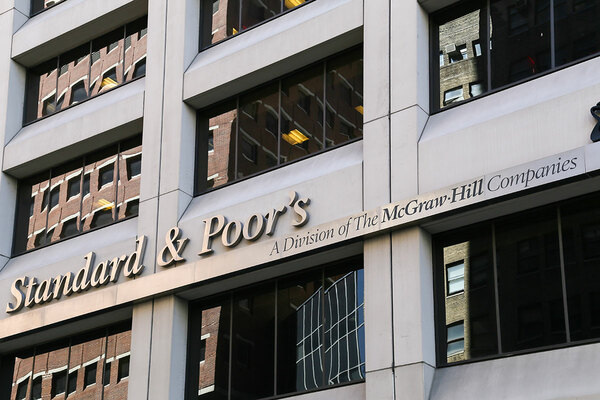

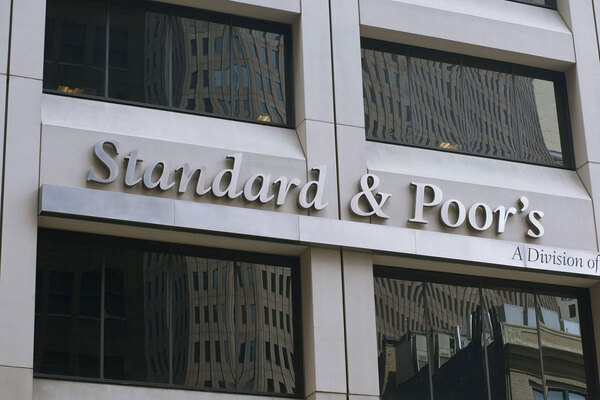
S&P said that providers’ EBITDA margins “continued to erode” in 2023, mainly because cost inflation “outpaced any significant rent increases”, which were constrained by governments in many regions, while providers increased their investments in existing homes.
S&P projected that the financial performance of social housing providers in the UK will improve “marginally” in 2023-24 and 2024-25, from a lower point in 2022-23 than it had previously forecast.
Speaking at the Social Housing Annual Conference on 30 November, Karin Erlander, who led the production of the report, highlighted the positives for the sector.
Ms Erlander, director and lead analyst for international public finance ratings at S&P, said: “We maintain our view that the sector, broadly speaking, should remain in the A category. So the resilience is there.”
She said S&P was calling the report on the outlook of non-US providers a “turning point”, but one with a “lot of caveats” and coming from a “very low level”.
She said: “But it builds into this resilience of the sector; we think that all the credit metrics we look at might have a chance to actually gradually, modestly, improve on a sort of sector-average basis.”
Ms Erlander said this after describing how S&P had seen a “divergence” across its ratings, due to the resilience of providers and what “levers” they can pull.
S&P previously said the sector should retain its A ratings due to management actions, such as phasing out investment in existing stock or scaling down development.
“Over the last couple of years, we’ve had upgrades and downgrades, more downgrades to negative rating actions than positive, but we have seen positive rating actions as well, and that feeds into the resilience of a particular housing association and that feeds into, ‘How flexible is the business plan?’,” Ms Erlander said.
“What levers can they pull to mitigate the impact of everything that we’ve seen in the last two years? Can they phase out investments in existing stock? Do they get grant funding to support some of that and also grant funding for new homes development, and how do they balance it?
“A housing association might want to continue to build and make investments. We don’t say that’s good or bad. It’s a decision taken and that’s what we want to understand. But if they have capacity, and resilience to do that, it might be that everything comes down one notch, but you might still be in the A category. So, it might serve both purposes.
“So, we’ve seen this divergence in the ratings. Some entities that were strong with in-built resilience in their business plan, they’ve been managing to save costs, scale back development, and they had positive rating actions from S&P. And then weaker entities to start with, when everything started to challenge the sector, they have not been able to drive those efficiencies in the same way. So they must fit into the BBB category.”
S&P said in its report: “We forecast investments in existing homes will rise at a slower pace, compared with the past two years. Expected growth in rental revenues and abating pressure on the cost base underpin our expectation that financial performance will recover modestly.
“In our view, demand for new affordable homes will remain strong but in light of currently high construction costs and interest rates, as well as the enhanced focus on investments in existing homes, the sector will scale back on developing new debt-funded homes in 2024.
“While we continue to think that [social housing providers’ (SHPs’)] debt burden will remain elevated, we project that the increase in debt will moderate and forecast that a decrease in borrowing costs next year will ease the pressure on SHPs’ interest coverage, which, on average, is weak.”
Negative bias
S&P set out its belief in the “turning point” of the sector despite the negative bias that remains.
The credit rating agency said pressure on the creditworthiness of non-US providers remained and it expects those at the higher end of the A category could experience downgrades, as 14 rated at A or above have a negative outlook.
It said that it could downgrade providers in the UK if, contrary to its expectations, inflation and interest rates “remain persistently high” over the next two fiscal years and management teams were “unable to take corrective measures”.
The negative bias across the sector will remain, but might ease in 2024, following a marginal improvement over the past year, S&P said.
Almost a third (31 per cent) of its ratings had a negative outlook, down from 33 per cent a year ago.
S&P said the UK was the “main driver for the negative bias” across non-US providers.
As of 31 October, about 35 per cent of its ratings on 42 UK providers had a negative outlook, indicating that S&P could lower the ratings over the next two years.
In contrast, S&P expects that the German social housing sector will “remain relatively stable” in 2024, which is reflected in the existing outlooks on the ratings for nine German providers, with one negative, one positive and four stable.
S&P said that France, in which it rates four providers, had a “stronger negative bias”.
Two of the four ratings there have negative outlooks, although these negative outlooks are linked to the negative outlook on France rather than an intrinsic pressure on the providers, the agency said.
S&P added that the four social landlords it rates in Sweden also experienced more pressure on ratings, with one outlook having turned negative for the first time since 2017.
Sign up for Social Housing’s weekly news bulletin

Picture: Alamy
Social Housing’s weekly news bulletin delivers the latest news and insight across finance and funding, regulation and governance, policy and strategy, straight to your inbox. Meanwhile, news alerts bring you the biggest stories as they land.
Already have an account? Click here to manage your newsletters.
RELATED
Insight30 Jan 2026
Market digest: housing association bond yields – January 2026



Comment29 Jan 2026
What are the key considerations when refinancing warranty debt?


- © Social Housing
- All rights reserved