


Sir James Cleverly: ‘fundamental change’ required to tear down development barriers
The shadow housing secretary is ready to “listen and learn” as he familiarises himself with a still-new brief, but is certain of one thing: getting homes built will require a “fundamental step change”. Sir James Cleverly talks Keith Cooper through his take on housing’s challenges



Sir James Cleverly: “The Labour government’s maths does not stack up”
Sharelines
Sir James Cleverly, shadow housing secretary, talks Keith Cooper through his take on the sector’s challenges #UKhousing #HousingFinanceGetting homes built will require a “fundamental step change”, Sir James Cleverly tells Keith Cooper #UKhousing #HousingFinanceSir James Cleverly admits he doesn’t have “all the answers” to housing’s problems.
It’s a frank but understandable admission from the seasoned Conservative MP for Braintree, former home secretary, ex-party chair and now shadow secretary of state for housing, communities and local government for the past five months.
“I’m relatively new to this brief and very much here to listen and learn,” he’d told delegates at the Social Housing Leaders Conference in London’s Square Mile last week, minutes before his first-ever interview with Social Housing.
But Sir James has “little doubt” that Labour’s response – including Rachel Reeves’ pledge to plough £39bn into a social and affordable housing programme over the next decade – will not work.
“The Labour government’s maths does not stack up,” he says. “That money is not going to hit the sector. I have little doubt about that.
“It may be well intentioned. But the bottom line is the money is drying up. They’re promising to buy their way out of trouble with money that I don’t think is going to be delivered, certainly not delivered at the scale that they’re promising.”
Read more
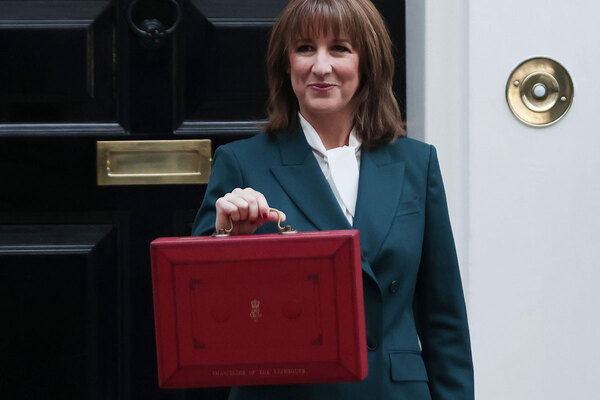


For a sector that has fought hard and then lauded the promise of this programme as “transformational”, the new shadow secretary’s seemingly confident claim might be unsettling.
Is this just political rhetoric from the opposition, plain and simple? Or a more prevalent view in parliament? The Ministry of Housing, Communities and Local Government says: “This is nonsense. We will invest £39bn as part of the Social and Affordable Homes Programme and any suggestion otherwise is entirely wrong.”
Sir James says he recognises that Labour’s decade-long programme offers the hope of financial certainty that the sector must crave. “It might be reassuring, but it’s an artificial reassurance that the sector would be taking from this very impressive-sounding number,” he says.
“If your model is tax and subsidise and your tax take is being squeezed, then so is your ability to subsidise. Making something sound impressive is quite easy. Talk is cheap.”
Some might question the credibility of an argument about public finances from a staunch supporter of Liz Truss, whose September 2022 ‘Mini Budget’ was widely credited with hammering the housing market as the cost of borrowing soared. Sir James says it is “lazy and easy to say Liz Truss broke the economy”.
“There was a very, very nasty spike, which caused real-world problems, but it was very, very short-lived,” he adds.
Barriers to building
As well as his doubts about Labour’s tax take covering its affordable housing budget, Sir James says social and affordable housing “subsidy” has been caught in a “cycle” in which costs are being perpetually pushed up by government diktat.
He says his party is “not in a position where we’re putting forward hard policy”. But his views on this supposed cycle, and the means by which he wants to escape it, suggest the direction in which his party’s policy on housing finance is travelling.
“I know subsidy is a bit of a loaded word, and I don’t regard it as a negative word. But we’ve got ourselves into a cycle and I know, in part, this happened under our [Conservative] government, where we increased cost and complexity and then subsidised the cost and complexity that we put in place.
“If your planning is all based on ‘I’ll give you this money and dictate to you what to do’, that can’t be right. We’ve tried that and it is not delivering. We need to try something else.”
This “something else” involves identifying and tearing down these government-imposed “complexities” or “barriers” to fixing the housing market, the shadow secretary says. This requires asking “difficult questions”, he tells Social Housing.
“What is stopping stuff being built? What is stopping stuff being re-built? What are the things that we are going to have to change? I don’t pretend I’ve got all the answers at the moment. But unless we are asking those questions, we are not going to see a fundamental step change in this sector. And we do need a fundamental step change.”
During our interview, Sir James offers up two examples of such barriers, both of which have been, perhaps unsurprisingly, championed by Labour.
His first target is the nutrient neutrality planning rules, which aim to minimise pollution from new developments, but have led to a “massive drop-off” in completions, according to one major housing association.
The last Conservative government’s bid to scrap these rules was scuppered by Labour after a “hue and cry”, says Sir James. “It’s very easy for someone to point at nutrient neutrality and go: ‘How dare you. How dare you. How dare you,’” he adds.
“What we are going to have to do is have a grown-up conversation about the balance of costs and where risk lies.
“I talked to some people in the homelessness sector yesterday, and not building carries a risk. The number of people in temporary accommodation is a real issue and yet we’ve got a system in place where we are not generating the quantum of social and affordable housing.”
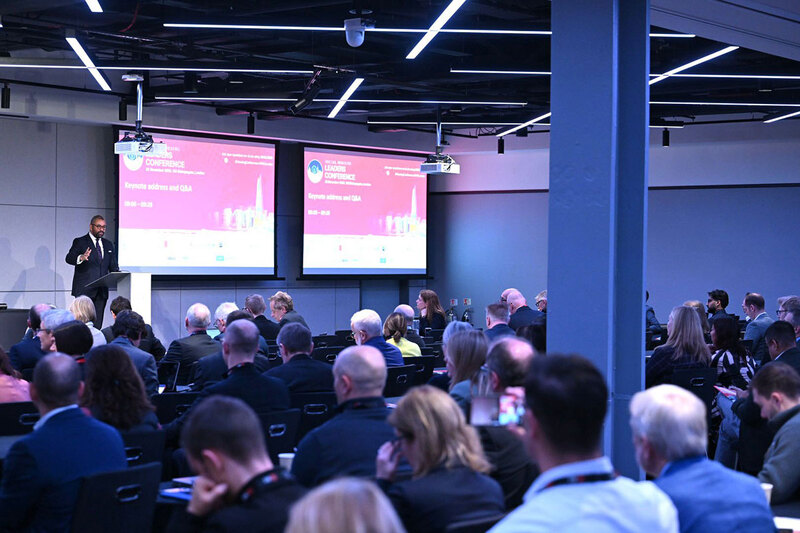
Sir James struck a philosophical tone in his speech at the Social Housing Leaders Conference
The shadow housing secretary’s second example of a risky complexity is Labour’s overhaul of the private rented sector through the Renters’ Rights Act 2025. This will ban so-called ‘no-fault’ evictions, curb rent rises and abolish fixed-term tenancies, among several other measures aimed at protecting private tenants.
Sir James says he is worried about the impact of the act on the supply of high-quality private rental homes. “It is largely going to destroy the private rental sector, because the kind of landlords that actually play by the rules are being squeezed out of the market, leaving the genuine modern day ‘Rachmans’ as the only thing remaining… which is absolutely counterproductive.”
More than a safety net
Sir James gives short shrift to Labour’s own attempts to pull down development barriers. The housing secretary’s October “emergency measures” package to unblock thousands of homes in London is a “day late and dollar short”, he says. Labour’s “big deregulatory” Planning and Infrastructure Bill is “not actually going to help”, he adds. “It’s not enough for Steve Reed to put on a baseball cap and say, ‘build, baby, build’.”
If the shadow secretary seems in attack mode in our interview, he struck a more philosophical tone in his conference speech. But this more rehearsed rhetoric still offers some clues as to his party’s trajectory on housing policy.
“What makes a home genuinely a home, rather than just a house?” he asked the delegates, before answering: “It is the fabric, but also it is the stability, it’s the safety that it brings. It’s the chance to build a life and use that as a foundation stone for everything else that people seek to achieve in their lives.”
He builds on this message in our interview, adding that social housing “shouldn’t just be seen as a safety net”.
Social housing “built badly” has costly consequences, he’d told the conference. “We pay for [badly built homes] in the most visible form. We pay for it in terms of repair costs and refurbishment costs. But also we pay in a more significant but less tangible way, in the anti-social behaviour, in crime, in fear, in fragmented societies.”
Sir James emphasised in both his speech and a subsequent Q&A session the need for well-designed “beautiful” homes, building at higher densities and even starting “from scratch” by flattening failed estates.
He singled out the Heygate Estate, in Southwark, south London, which was built in the 1960s and demolished in 2014 as part of the at-times controversial ongoing Elephant Park regeneration project.
“I spent my whole life… driving quickly past the Heygate Estate,” Sir James, who was born in nearby Lewisham, told the conference. “It began as a promise and ended up as a warning.”
Housing associations, councils and the wider sector will have their own views on the role of social housing in society, and on what makes a beautiful home or successful estate, and will surely weigh up how far the government will deliver on its £39bn pledge.
What Sir James asks to be judged on is his party’s “honesty”. “By the time we’re looking at the next general election, the choice is going to be between what the Conservative Party would do against what Labour have done,” he concludes.
Sign up for Social Housing’s weekly news bulletin

Picture: Alamy
Social Housing’s weekly news bulletin delivers the latest news and insight across finance and funding, regulation and governance, policy and strategy, straight to your inbox. Meanwhile, news alerts bring you the biggest stories as they land.
Already have an account? Click here to manage your newsletters.
RELATED




- © Social Housing
- All rights reserved