


Moody’s upgrades PfP in recognition of move away from riskier non-core activity
Moody’s has upgraded the credit rating of Places for People (PfP) one notch from Baa1 to A3, moving it into its ‘prime 1’ range.



Picture: Getty
Sharelines
Agency @MoodysInvSvc upgrades credit rating for @placesforpeople in recognition of move away from riskier non-core activity #ukhousing #socialhousingfinanceThe agency upgraded PfP as an issuer, along with subsidiaries Places for People Captial Markets and Places for People Treasury, maintaining its stable outlook for all three. It affirmed the A2 rating on its backed senior secured debt.
Moody’s said the upgrade reflects PfP’s “shift in strategy”, which has seen it scale back riskier non-core activities. It also noted “management’s focus on improving the group’s profitability which will boost interest cover ratios, and its very strong liquidity position”.
According to its business plan, PfP will increase the proportion of turnover generated by social housing lettings from 42 per cent in 2019 to 44 per cent over the next three years. Moody’s noted that, while this is well below the sector median of 78 per cent, it is well beyond the 33 per cent that last year’s business plan predicted.
Read more


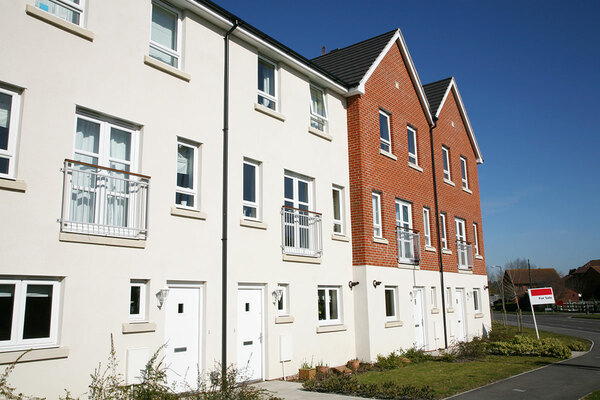
The agency added: “Included in the reduced non-core activities is a lower exposure to market sales, with an expected peak exposure of 28% of turnover in the current business plan compared to last year’s forecasted peak of 38%.”
PfP is also expected to increase its interest cover ratio, which dropped in 2019. According to Moody’s, interest cover on its social housing lettings will rise to 1.4x in 2020, from 1.2x in 2019. Cash flow volatility interest cover is now expected to hit 1.8x by 2022, having also touched 1.0x in 2019.
As of September 2019, the group had £826m in immediately available liquidity, enough to cover 1.9x its forward-looking cash need. This compares to the rated peer median of 1.6x.
Nevertheless, Moody’s warned of PfP’s “high exposure to non-core activities which are less profitable than the core social housing lettings business and therefore restrict the group’s margins”.
It noted that operating margin on social housing lettings stood at 47 per cent in 2019 but the margin on its other activities was 6 per cent.
PfP’s debt is also relatively high with gearing of 59 per cent in 2019 compared with a rated peer median of 49 per cent.
PfP has been approached for comment.
How does UK social housing compare with European markets from a credit perspective?
Social Housing special reports

Each month Social Housing focuses on a specific aspect of housing finance and collates and scrutinises the data for hundreds of housing organisations.
The reports below contain unparalleled commentary and analysis along with detailed sortable and searchable data tables.
Unit costs 2019 Our analysis of data from the English regulator has found that unit costs have risen among all types of housing association, with overall maintenance costs seeing the highest weighted average increase of nearly seven per cent
Impairment 2019 Housing associations’ impairments rise almost 40% in a year, driven by fire safety costs, contractor insolvencies and reduced land values
Global accounts 2018/19 Housing associations’ surplus for the year before tax decreased by five per cent to £3.76bn, driven by a 6.6 per cent drop in England
Affordable rent profile 2018/19 The level of affordable lettings dropped for the third year in a row
Staff pay Data from audited accounts of 206 housing associations shows that average staff pay in 2018/19 was £31,787 – a rise of 3.2 per cent over a 12-month period
Professionals’ league Our exclusive professionals’ league finds that activity continued apace in 2019, when housing associations increasingly looked to private placements
Sales proceeds Despite a 10 per cent rise in housing associations’ income from development sales in the last financial year, sales revenue is likely to remain flat over the coming years as a result of the property market downturn
Capital commitments The total capital commitments of 200 housing associations rose by 15 per cent in the past year, analysis by Social Housing has found
Reliance on sales surplus Social Housing finds that the total sales surplus of 150 English registered providers has dropped by nearly 10 per cent, as a result of lower market sales surplus
Stock dispersal How many council areas does your housing association operate in? How concentrated is its stock?
Accounts digest 2018/19 How does your housing association’s finances compare to others?
Housing Revenue Account part two How do councils compare in their 2018/19 Housing Revenue Account positions? Steve Partridge of Savills takes an in-depth look
Diversification of income We look at how housing associations are diversifying their income, and finds that they made 10.3 per cent more revenue from shared ownership and non-social housing activity
Impairment 2017/18 Social Housing takes a close look at the accounts of the 130 largest housing associations, and finds that impairments rose by nearly a third to £78.4m in 2018
Global accounts Social Housing’s analysis of the sector’s global accounts finds that housing associations’ pre-tax surplus fell last year – driven by drops in England, Scotland and Wales (August 2019)
Affordable rent profile We find that the number of affordable rent lettings recorded last year by housing associations in England has dropped for the second year in a row, suggesting that the sector is shifting away from the tenure
Capital commitments We scrutinise the capital commitments of the 208 largest housing associations in the UK (June 2019)
Housing Revenue Account part one Steve Partridge of Savills takes a look at the financial factors councils should consider in their Housing Revenue Account business planning (May 2019)
Reliance on sales surplus Our analysis reveals that profits form 42 per cent of 150 English housing associations’ total surplus (April 2019)
Sales proceeds We look at housing associations’ build-for-sale income and find a two per cent increase in 2017/18 (March 2019)
Shared ownership sales England, excluding London, has seen a four per cent rise in shared ownership sales – much lower than last year’s 16 per cent increase (February 2019)
Stock dispersal We show that housing associations’ general needs stock is becoming more concentrated within their local authority areas (January 2019)






- © Social Housing
- All rights reserved